Showing posts with label learning a new culture. Show all posts

Monday, November 23, 2015

The Racist Missionary

Jonah is an anomaly.

His book is unique among the prophets because it is entirely autobiographical. He did not desire the incredible ministry successes he experienced. God took the initiative to show His grace to the Assyrians by sending them a missionary. Jonah was not merely apathetic about this, he was antipathetic--he did not want that ethnic group to be converted. They were a different skin color, language group, and geography from him; and their culture was vastly different. He wasn't interested in their conversion.

And after ten years on the mission field, I can see that Jonah was not the only missionary to struggle with racist feelings.

What, a racist missionary? Isn't that an oxymoron? How could a racist be a missionary? Well, emotions of bitterness and cynicism towards the people on your field don't come all at once. Missionaries don't ever go to the field thinking that they could even become close to being racist! After all, they've given up everything because of their love for another people group, right? Nevertheless, negative emotions towards the very people you want to love can creep in over time after many adverse culture-shocking experiences. (Look at the results of "culture stress.")
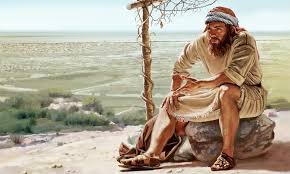
jonah gourd
Jonah is a good bad example of NOT loving the people to whom you are sent. Thus Jonah's story is a great starting-place in a biblical discussion of racism. Jonah was "very angry" when God showed mercy to the Ninevites. So God used an object lesson of a quick-growing, then quick-dying gourd, with some gentle questions, followed up with a gentle, insightful rebuke to show Jonah that his hatred towards the Ninevites was wrong.


And God said to Jonah, Doest thou well to be angry for the gourd?

And he said, I do well to be angry, even unto death.

Then said the LORD, Thou hast had pity on the gourd, for the which thou hast not laboured, neither madest it grow; which came up in a night, and perished in a night:  And should not I spare Nineveh, that great city, wherein are more than sixscore thousand persons that cannot discern between their right hand and their left hand; and also much cattle?

~Jonah 4:9-11
Who are these persons that God is talking about? Who cannot tell the difference between their right and left hands? Isn't it the children? In other words, some litmus tests of whether you are racist or not are the following:
  • if you are unable to show love towards people from another ethnicity
  • if you wish for genocide including the children
  • if you believe that a person from that race cannot be converted, or
  • if you believe that all the people in that culture are only bad, thus even the children have no good potential.
I still remember a defining moment for Seth and me as new missionaries. We had just moved to a rural village in South Africa and were visiting neighbors in an attempt to meet them and learn their culture. We came across an old man who had been almost raised by Swiss Presbyterian missionaries who pioneered missions to the Tsonga people. They had sent him to school abroad, and his English was excellent.

Trying to answer his wife's questions as to why we were there, we began evangelizing, assuming that they knew basic ideas of salvation and the Gospel because of their background as staunch Presbyterians. Imagine our surprise when his wife inquired what we meant by "salvation." She queried, "You mean, baptism?" Startled, Seth began expounding the Gospel. Her husband cut us off with an eye-opening statement: "Oh, you'll never get them to understand details like that. These people will never get the details."

The Gospel? Details? Sadly this man was a living example of his own stereotype.

I remember another shocking scene in my first year here. Our landlord came over drunk one night to visit with us. I will never forget him pouring beer on the hood of our pick-up truck for his pet monkey to lap up, while saying, "This chimp is smarter than any of those * blacks."

After years of ministering to a pagan culture, missionaries can get very discouraged from witnessing repeated sinful behaviors. They can get bitter from attacks or disappointments by untrustworthy people. They can become cynical, wondering if fruit is real or how long it'll last this time. Harmful generalizations are made: "These people are all like that. They will never get better."

Missionaries to less civilized people groups eventually have to deal with the question, "Why are these people like that?" When a missionary hits that disillusioned stage of being so frustrated, it seems that two paths lie before him. He can explain the deficiencies he sees in another culture in one of two ways:

He could say that those people are like that because they are inherently inferior. They are simply unable to become an enlightened, Christian culture. He could become like our landlord, bitterly saying that the people have no more hope than animals. In other words, he could become a racist.

We have decided to take the second path, however, which explains stereotypical problems of another race with this answer: The Devil has blinded their culture for so many thousands of centuries and they have had so little common grace given to them, that they need a lot more time and work of the Holy Spirit to reflect Christianity in their culture. (2 Cor. 4:4) In other words, it is Satan we are fighting, not people.

Missionaries need to guard their hearts and thinking about pagan cultures. If you don't believe that cultural sins and deficiencies are strongholds of Satan, and that these are spiritual issues deserving of your empathy, you will become a racist missionary, constantly embittered and frustrated instead of responding with compassion. Because if the answer is not that the Devil has a stronghold in that culture, then the answer is that those people are just inferior, inherently, for centuries. And that is racist.


Thursday, September 18, 2014

Missionary Fairyland Grocery-ville

I want to take you on a trip. (Don't you just love adventures?)

There is a quaint little shopping spot called Missionary Fairyland Grocery-ville. It's a place made especially for missionary women. Today, I got special permission for anyone (missionaries or just friends of missionaries) to take a tour.

You can drive right up, and parking is always available. Isn't that lovely? You walk in the door and are immediately greeted with two happy things... a smiling door greeter and air conditioning.

As the door greeter hands you a basket, she asks if you need any help, and you respond, "No, thank you." Then you continue down the well-labelled aisles to find the items you need.

Oooohhh! A sale on your favorite items! Within minutes, you maneuver down the spacious aisles and find everything you need. You pile your treasures onto the checkout counter with ease because there was no line. The cashier smiles and greets you politely. She rings up each item as she chats with you. Then she gives you the total. She bags your items as you pull out your wallet. You pay and head on your way. You get home and whip together a fabulous meal with all the perfect ingredients. ***insert happy sigh, pink bunnies, and rainbows***

Back to Reality-ville.

Our favorite seasoning... TexJoy Steak Seasoning.
We bring it from the States.

Monday, August 11, 2014

Y'All Look Alike!

Friday night, my husband was letting a church member out of our gate and locking it up for the night, when a man driving our teammate's pick-up truck drove up to our gate and repeatedly shouted in Tsonga, "Where's my canopy??"

Huh???

Once again, it was a case of mistaken identity. Though we've lived here a bit longer than our teammates in another less-central village 10 minutes down a tar road that connects a seemingly endless string of villages, our teammates are by far the better known family around here. Their house is in a much more visible place in their village on a main thoroughfare that leads to two other villages. We confused the Tsongas even more by each having four children in rapid succession, each having the same exact pick-up, and even looking somewhat similar. And of course, we both speak the language.

So our teammates recently bought a new car, sold their pick-up identical to ours, and the buyer wanted the canopy for the bed of the pick-up. He's from a whole 'nuther string of villages somewhere else, so he drove out here and asked someone where the white guy lived. He was directed to our house. Our bewilderment was visibly funny when he shouted at us for his canopy!

Anyway, it didn't take long for us to figure out what had happened. We're used to this confusion. People constantly shout our teammate's name at us as we pass in the truck, asking for lifts back to their (and his) village. Seth goes to the local hardware shop and gets called by our teammate's name. He rarely tries to correct them, as listening skills are not generally a strong point of this culture.

If they listen long enough to understand that there are, oddly enough, two white families in this sea of chocolate out here, they usually laugh a bit chagrined: "Oh, I thought you were him. There's another white person?"

"Yes," we respond. "Don't worry. We know: all white people look alike."

Outburst of laughter and quick agreement! "Yes," they agree, "White people all look alike." Then they might flick their nose to show the offending member which causes confusion. You know, we all have sharp-tipped noses...

We tease them back. "What? You only have to remember one or two white people. Look at all of you we have to keep straight!"
Can you tell these pretty girls apart?
I remember getting confused back when I was a teenager ministering on my church's bus route. Many of those little black girls with their adorable beaded braids looked the same to me. Now I can tell the Africans apart even if, for example, a woman wearing a hairpiece tells me her full name one day, and comes to church the next day without the hairpiece and uses her nickname. ;) I can kind-of tell when someone's from Zimbabwe versus South Africa, and it's even easier to pick an Ethiopian or Somalian out of a crowd. (There is a small Somalian community here.) Seth's better at that than me.

Anyway, I just wanted to share the funny thought that if you've ever looked at a people group (Africans, Koreans, whatever) and gotten mixed up because to you they all look the same--they think the same thing about you!


Monday, July 14, 2014

Lifting Christ Up--Down Under

I thought it would be so interesting for us to have some in-real-life missionaries answer those "Good Questions to Ask Missionaries" that I posted here a while ago. That way, you can compare fields a little bit and understand what missions ministry looks like all over the world. What difficulties are specific to a certain continent or culture? Perhaps you can apply this information to pray for other missionaries in a similar field to the lady being interviewed.


Today, meet Jennifer Bauer, the mastermind here at the BMW blog. She blogs about life in Australia at her personal blog Be Thou Exalted. If you haven't gotten enough of our awesome critter stories around here, you would be really interested in the kinds of critters a missionary to Australia has to deal with: The Critters and Creatures in My House.


  1. How many children do you have? What ages?
Autumn (11) and Cody (6) 
  1. Do you homeschool? Name your favorite curriculum that you use (whether just one subject, or an all-in-one):
We do homeschool.  Currently we use ACE. (Here is why I chose ACE for this school year.) But we have used Abeka, Apologia, Rod and Staff, and a mixture of others. 

  1. Country of service:  Australia
  1. How long have you been there?  2 years, 8 months
  1. What do you do there?
Currently my husband is interim pastor for a small church, but we were called here to work with the Indigenous People.  So when the new pastor arrives in two weeks, we will be going full-on with our new ministry with the Indigenous (Aboriginals). 

  1. Are you learning a language? How is it going? Are you discouraged?
We are planning to learn Kriol, which is the Indigenous language spoken in our area.  Most of the Indigenous speak English, but we feel it’s important and respectful to learn their language.

  1. Success: Have you had any encouragement in ministry recently? Can you tell me two or three things that have encouraged you?
We have had many open doors to go and have church services in the communities.  One cannot just walk onto a community, you must be invited.  My husband has had many invitations the past few weeks, and we can see the Lord making the way for us.  We’re so excited!  I also have my youngest brother visiting for 3 months.  This has been a huge encouragement for me.

  1. Challenges: What is your greatest challenge in ministry? What other difficulties wear you down?
Although we are quite remote, we still have a stocked grocery store, wifi, and even a small Target, so in regards to location we are blessed not to have too many challenges.  I think our greatest challenge in ministry will be reaching the Indigenous men.  Alcohol (grog as they call it here) is a major detriment and a common past time for the men. 

  1. How is your life similar to life in America?
There are many similarities to America.  Although we don’t have some of our favourites (Lucky Charms, Captain Crunch, Cracker Barrel, etc.) we do have the modern conveniences (indoor plumbing, wifi, McDonalds, Subway, grocery store 2 minutes away, etc.)

  1. What are some special benefits you or your family experience from where you’re ministering? (or from being missionaries)
To be able to share the Gospel with someone who has never heard of Christ is just an amazing privilege.

  1. What are some positives and negatives of your culture (that you’re ministering to)?
I’m speaking more of the Australian culture rather than Aboriginal culture here.  The positives is the freedom of religion, a very relaxed, laid back attitude among the people (no one is ever on time!), and the welcoming of Americans (for the most part, there are a few Aussies who prefer the Yanks stay home J ).  Negative – hmmm…it’s hard to think of any, but if I had to say one thing, I guess it would be the amount of alcohol that is consumed here by the Indigenous and the white fellow.

  1. What sins might a missionary be especially tempted with that another Christian in the U.S. might not?
Not sure how to answer this one.  The only thing I can think of is that nudity can be shown on tv here after a certain time.  As well as any kind of language.

  1. What books have you been reading? Do you have any book recommendations?
I am currently reading Growing Up Duggar.  I definitely recommend!  My favourite missionary books are Evidence Not Seen by Darlene Diebler Rose and Jungle Pilot by Russell Hitt.

  1. How can we pray for your people or culture in a general way?
Please pray for us as we begin this new phase in our ministry in working with the Indigenous People.  Please pray that we are sensitive to the Lord’s leading and to the people we are called to witness to. 

  1. How can we pray for your family specifically?
That we will continue to grow closer to the Lord, for His safety and protection while travelling to communities, and as a selfish request, that we will be able to take a short furlough home for 6 weeks to be with our family during Thanksgiving and Christmas.


Monday, June 23, 2014

Reaching the Unreached in South Asia

I thought it would be so interesting for us to have some in-real-life missionaries answer those "Good Questions to Ask Missionaries" that I posted here a while ago. That way, you can compare fields a little bit and understand what missions ministry looks like all over the world. What difficulties are specific to a certain continent or culture? Perhaps you can apply this information to pray for other missionaries in a similar field to the lady being interviewed.


Today, meet Charity Woon, a fun, thought-provoking contributor here at the BMW blog. She blogs about everything from adventures on the field to homeschooling tips to personal devotions at her personal blog Road Schooling...Our Life on the Road of Life. If you'd like a good gross-you-out story, you might enjoy reading Meat Shop Adventure; or if you'd like to have your heart stirred for evangelism, read her post about heroes of faith across the world, We Will Not Fight Back.


  1. How many children do you have? What ages?
We are a family of seven. My husband's name is Jason, and my name is Charity. We have three crazy, adventurous, fun children: Ben (15), Michaela (10), and Gabriel (7). Then there are our two dogs, Chief and MoMo. (Got to love the furry babies, too! They keep us safe from rats, snakes, and robbers.)

  1. Do you homeschool? Name your favorite curriculum that you use (whether just one subject, or an all-in-one):
We are very eclectic in our homeschooling style. We try to make the schooling experience fit each child the best we can. It is a little tougher on the field, though, so I have to say Landmark Freedom Baptist is my favorite "go-to" curriculum. Landmark Freedom Baptist Curriculum

  1. Country of service: Southern Asia
  1. How long have you been there? 19 months
  1. What do you do there?
We are church planters seeking a location for our first church, but in the mean time, I play the piano for a young church plant, and I practice Titus 2 any opportunity I get. Right now my role is more of hospitality, motherhood, and mentorship, doing my best to demonstrate Biblical marriage and motherhood to first generation Christians who are hungry to learn how to parent God's way. 

  1. Are you learning a language? How is it going? Are you discouraged?
Language? Um... It's coming slowly, but surely! I am not discouraged at all. Some days are better than others, but every day is one day closer to communicating clearly what God has put in my heart

  1. Success: Have you had any encouragement in ministry recently? Can you tell me two or three things that have encouraged you?
I... am... growing... strawberries! That may not be encouraging to you, but for the garden-challenged person like me, it is HUGE! Why? Our garden has opened up many opportunities to meet and talk to people. The more it succeeds, the more opportunities we have.

We recently went to visit my husband's language school instructor and his wife. We were there four hours and I was actually able to hold a pretty good conversation with them. Definitely encouraging!

It is a blessing to be forming deep friendships with nationals. God has also supplied a national man to work with my husband in planting a church.

  1. Challenges: What is your greatest challenge in ministry? What other difficulties wear you down?
On this field, there are plenty of things to potentially cause stress, but there is one thing that brings me literally to tears on occasion. Driving! The roads are very dangerous here. Even the most cautious drivers have accidents. The rule "look both ways before crossing" doesn't exist here for drivers, pedestrians, animals, and more. I thought maybe most third world countries were this bad, until a few very well-traveled people told us these roads were far beyond what they had experienced in other third world countries. Every time we arrive home safely it is a clear demonstration of the grace of God.  Driving my little scooter here with two young children in tow has improved my prayer life dramatically, though.

As far as general ministry challenges? Many fields struggle with some of the same issues we have. The people here do not know anything about Jesus or what a Bible is, so we have to start from the beginning... literally Genesis 1:1! It takes quite a while to share the Gospel clearly. Then when they do understand, they face the fear of real persecution (losing home, family, friends, job, etc.) Many women will not go against their husband's commands if he forbids her to become a Christian.

  1. How is your life similar to life in America?
Our schooling is very similar. Our bedding style is the same. At home, our eating is very similar though the preparation is much more involved. We still have family nights. Shopping? Totally different! Cleaning? Different. Entertainment? Different. Clothing? Sometimes similar. Housing? Different for the most part. There are many more differences than similarities.

  1. What are some special benefits you or your family experience from where you’re ministering? (or from being missionaries)
God has helped us all grow spiritually by putting us in a place where what is in our hearts is forced to come out. I truly believe God did not put us here because we have something special to offer. He put us here because this is where He can make us most like Christ. Thankfully, while we are here He is choosing to use us for His glory.

  1. What are some positives and negatives of your culture (that you’re ministering to)?
Positives: The women here work harder than my American mind can even comprehend. I have also seen people who were willing to become Christians even when they knew they would lose a home, family, and more. With the exception of driving, the people here live a less time-oriented life. The people here know how to survive on next to nothing.

Negatives: Much of their culture/government/education system is permeated with their religion. In much of the culture there is a lack of respect for the sanctity of human life. It is heartbreaking to see such intense child abuse or neglect and not be able to legally do anything about it. It is a "me first" culture, and yet they can be some of the most generous people. Lying and stealing are a part of their culture and is often seen as acceptable. The caste system exists here.

  1. What sins might a missionary be especially tempted with that another Christian in the U.S. might not?
Honestly, being here has revealed some ugly things in my heart that in the States I would have never realized were there. In the States, I never struggled with "road rage." I assumed it just wasn't a problem for me. God has put me in the right hot water situations here, and what's in the heart has come out! I am thankful for His patience with me! Another temptation I battle? Being critical of people in America who complain about power outages, three days of rain in a row, or having a long drive to church. Those problems are a way of life here. But being critical is no less of a sin than complaining.

  1. What books have you been reading? Do you have any book recommendations?
I am currently reading Don't Let the Goats Eat the Loquat Trees by Thomas Hale. Love it! Though he was a medical missionary, I can truly identify with so many things he faced. I just finished The Choice is Yours by Terrie Chappell. It was a great "refocusing" book. I treasure her other book, It's a Wonderful Life.

  1. How can we pray for your people or culture in a general way?
We desire that this country would continue to head in the direction of freedom. It has only been in recent years that it became legal for the people to become Christian, but it is still illegal to influence them in that direction. Christians are still persecuted. Also, the country needs political stability. The situation gets pretty ugly during elections.

  1. How can we pray for your family specifically?
We are about to enter a new phase of life. Our oldest child has two more years of school before he will go to Bible college in the States. I am not sure this Mommy will be ready for that, but I am trusting God's grace is sufficient. Just as He gives saving grace and dying grace, I am sure He will give "child-going-to-college-10,000-miles-away" grace. In the mean time, we desire prayers in our preparation for him to finish high school. We also desire God's direction in ministry as we prepare to plant a new church. Finally... visa renewal is due! We are hoping to get one-year visas this time. 


Monday, March 24, 2014

When Words That Do Not Exist Communicate ~ The Many Jobs of a Missionary, Linguist, Part 2

A missionary must learn the language of the people to whom he is ministering.

This really should go "without saying"; but unfortunately, some missionaries rely on translators for years, making little attempt to apply themselves to the language of the people around them. I have little to say in return to such a missionary. There are so many reasons why it is important for a missionary not only to get by in the language of his people, but also to be a linguist--to study the language in an attempt at eventual fluency. (This job never really ends.)

Why should missionaries be linguists?

Well, probably most obviously, attempting to learn the language communicates love--and humility. When people see a "smart" person (and some Africans think you are smart simply because you do speak English) humbling himself by stuttering out concepts in their home language, it makes you a real, accessible person. So many Africans have been delightedly surprised to hear us greet them in their language. And for some, their delight is unbounded when they hear us converse with them even beyond the greetings. Our first male convert came about because Seth stuck out his hand to shake hands with a security guard at a grocery store and greeted him in Tsonga, "Mi njhani?"
Our first adult male convert--and he helped us learn the language and culture quite a bit, too!
Next, learning the language forestalls errors in translation or miscommunication. Take out the middle man, the translator; and although yes, there are certain concepts the translator will be able to say better than you, once you have learned the language, you may find that there are certain concepts the translator himself didn't understand the way you meant them; and you may be chagrined to find out how he was translating it.

But finally and most importantly, there is a vital connection between language and culture. Learning the two go together. There is a debate about which came first--the chicken or the egg? Or in this case, the culture or the language? When you learn the language, you are gleaning eye-opening information about how those people think. What is important to them, and what isn't? In this case, words that they do not have may communicate just as much as the ones they do have.

Here's how an expert says it:
Ethnolinguistics, the study of the relationship between language and culture, has shown that languages provide categories through which people think. Languages mirror culture at every point. They emphasize and systematize what is important to the culture and filter out what is not important. For example, Eskimo tribes have as many as seven distinct labels to distinguish between types of snow ("falling snow, snow on the ground, fluffy snow, wet snow, and so forth"), while English has one all-inclusive word for the concept. Equatorial African languages have no term at all for snow but typically expand the word hail to include the idea of snow....

As missionaries evangelize in animistic contexts, they must realize that as outsiders to the cultures they must learn the categories of animistic thought as formulated by cultural insiders....These categories must be understood by the missionary if he is to effectively communicate God's eternal message in contexts where animistic worldviews are present.  pg. 45-46, 48 Communicating Christ in Animistic Contexts by Gailyn Van Rheenen
The Tsonga language is much less complex and much more limited, especially in words for propositions, than English. We are stymied at times to find ways to communicate important Biblical truths in words that don't exist in Tsonga! Here are some examples, some of which we can communicate through a phrase or approximation, but some of which are simply not there:

Words Tsonga Does Not Have
  1. Affect
  2. Eternity, eternal, everlasting
  3. Condition
  4. Priority
  5. Right, wrong
  6. Moral, immoral
  7. Valid, invalid
  8. True, false
  9. Temporary, permanent
  10. Proportion
  11. Mental, doctrinal, intellectual
  12. Certain, definite
  13. Specific, particular
  14. Limit
  15. Naturally, by nature
  16. Early
Distinctions for which Tsonga has only a single word
  1. Law / principle / rule / guideline / direction / standard
  2. Job / task / role / occupation / work
  3. Late / prolonged
  4. Want / need
  5. Must / might / can / could / should
  6. Justice / righteousness
  7. Mercy / grace
  8. Old / elderly
  9. Trouble / danger
  10. Good / great
  11. Better / best
  12. Consequences / payment
  13. Speak / say / mean / communicate
  14. Worthy / Deserving
  15. Love / will / like / desire
You can see the importance of some of those words to communicate the Gospel or other important Biblical truths. What does it say about a culture when they have no words for "right" or "wrong"? We have to say instead that a thing was good or not good, or that it was beautiful or ugly. When a culture has no words for justice or retribution, how do you carefully explain those concepts as applied from God towards us? Or from the government towards its citizens?

A culture may be just fine missing some words or distinctions, as in the above quoted example of snow; but when a culture is missing certain words, it shows the spiritual state they are in--even their spiritual degradation and danger. Please pray for our dear people and for us as we use with our limited abilities a limited language to explain an unlimited, worthy God.

I am interested to hear from my missionary friends if they have found the same things true in the language in which they minister?

Thursday, October 31, 2013

Training Missionaries During Survey Trips

I posed a question to a group of missionary women recently. The responses I got were wonderful!


My husband and I were blessed in that when we were on our two-week survey trip, we stayed with some veteran missionaries who intentionally made it a training period. They taught us an enormous amount of practical things! Our first year has been less traumatic and overwhelming because of this training. So, with this in mind, I asked these ladies, "What would you teach a new missionary while they were on their survey trip?" 
Here are some of the responses I got:

Monday, October 14, 2013

To Say or Not to Say??

...and how much? These are my questions on Missionary Mondays when I want to share Africa with my readers and loved ones.

Missionaries live their lives getting a taste of what it means to be a pilgrim, to be in this world but not of it. No matter where we are, we don't completely fit in. We are people of two cultures--the one we came from and the one we're trying to assimilate for the Gospel's sake.

The culture we're living in (I'll call it "Culture #2") does not understand us--and really doesn't usually try. And when we go back to our own culture ("Culture #1"), we can't remember what it was like to only know American culture. The longer we're away, the harder it is to converse on what seems like narrower scopes every time we go "home." The only people who can really understand what it's like to know both cultures are your teammates (if you have them), and oh the letdown if they don't understand--or worse, if they do understand yet disagree with you!

If we tell culture #1 about the culture we live amongst, we walk a thin line of whether or not to say this or that and how much to describe. If we say more in an effort to really explain and increase the hearer's understanding, it can come across as complaining, self-pitying, unloving, judgmental, critical, politically incorrect; or perhaps fault-finders might even use terms like "hateful" or "racist." That is, if we didn't already lose attention to their iPhone's incoming text message.

Or even worse is when you try to explain this or that facet of culture #2 to a person from culture #1, and in the greatness of their misunderstanding and inability to form a concept of a worldview and culture outside their own, they proceed to inform you--the missionary who has loved and lived among those people for X amount of years--how you don't understand and the situation is really like this, and what you ought to do, say, or think.

Perhaps this happens, and perhaps this happening has become more normal, because of the popularity of social media and Blogland, where everyone has a say, whether they know or understand much of what they're talking about. But that's another topic. Which leads me to yet another angle of how a missionary feels self-muzzled: if you summon the bravery to attempt to subtly (or openly) talk to culture #1 about perceived errors inside it (potential or real) that you feel your stay in another culture has enlightened you to, it's like you're speaking another language. There just seems to be a disconnect in understanding your bottom line.

I was asked to speak at a ladies' missionary society when I went "home" on furlough, and I had a hard time deciding what to speak on. I thought about speaking on "Things I Usually Don't Tell Americans Because I Think They Won't Understand," but I wasn't sure they would understand. :) And I'm not sure I can even formulate it or should try after 8 years of service. Maybe it's something I will be better and wiser at after 20 years here.

Usually missionaries resort to safer subjects, as I generally have on Missionary Mondays--something concrete like what we're actually doing or something blasé that doesn't completely communicate our challenges, thoughts, or lives. I would like to give a clearer picture than that, but when you've been misunderstood a couple of times, especially on your first few times even attempting the communication, you get shy.

I had a best friend in college with a Southern accent. I felt like she could get away with saying whatever she wanted in that sweet Southern drawl. She'd tell her roommates, "Y'all jest need to pick yer stuff ah-up!" and they'd practically hug her and take her out for ice cream; whereas I would say, "Um...would you mind...moving that pile a bit when you get a chance?" And the hall leader would have to be brought in to clean up after World War III.

So maybe that's the solution. I'm going to try to write more about our views on culture and ministry in an African setting when I have the time to re-read and re-edit my rough draft a 1,000 times first ;), and y'all jest need to read it with a Southern accent, 'k?

IMG_1182
Seeing in black and white.


Thanks to Jen Bauer for giving me the opportunity to even attempt. :)


Friday, October 4, 2013

Belonging


We came to Spain in 1984 with a ten-month-old baby in our arms. We hadn’t made a survey trip. We knew no Spanish—not one word—and no one besides our co-workers and the Spanish pastor’s family. When we arrived in the Madrid airport in the early morning, we had lost almost two nights of sleep. Our co-workers met us in a very strange looking, Siata van, something like a squarish tin can on wheels. We piled in along with their family, and one of the first things the lady said was, “Husband, we need to find a bar.”

I was suffering from jet lag and from wrestling with a very active baby the whole trip. And this wonderful Christian lady was looking for a bar? (I had never set foot in a bar in my life!)

Several miles down the road, we pulled into a spacious parking lot outside a lovely cafeteria where we got breakfast rolls and coffee—or in my husband’s case, hot chocolate. Lesson Number One: a bar in Spain is not the same thing as a bar in America.

Lessons Number Two and Three soon followed. Two: there are different kinds of bars—those for men, and those for families with children. Always look before entering. Three: bars always have public restrooms. It’s a very helpful thing to know.

I would say that our whole first term—five years—we felt like strangers in a strange land. We got to be fairly fluent in Spanish, but people still stared at us like we came from another planet. (I was clueless about dressing to blend in, and there weren’t many non-Spanish/Basque people living in the Basque region in those days. Plus, those were the Reagan years, and the sentiment was very anti-American.)

After our first furlough, when we returned to Spain, we felt oddly “at home.” Oh yes, there were still some big challenges and many learning experiences, but we knew that God had called and we were where He wanted us to be.

Fast-forward sixteen years from our arrival. Our daughter called home from college in the States. “Mama and Daddy,” she began, “should I say the Pledge of Allegiance?” Our eyes were opened to the reality of third culture kids. Our daughter wanted to know if it was honest to pledge allegiance to a country she had never lived in. Oh yes, she was a U.S. citizen from birth, but . . . .

Are there days when you feel like you don’t belong? (After twenty-nine years in Spain, we still have them.) Do you wake up sometimes, look out the window, and want to turn over and pull the covers over your head? Do you long for the things you had back in the States? Do you miss ________________? (doughnuts, Starbucks, Wal-Mart, creature comforts, people looking up to you as a missionary; you fill in the blank.) Do your kids struggle with being in between? Or do they already feel so much a part of their adopted country that they think America is the foreign country?

Belonging . . .

Let me share some important concepts and Scriptures with you.
  • To the new missionary: hang in there. Eventually, this crazy foreign place will feel like home. It is very important to go back for that second term. Give yourself time to learn and adapt. It won’t happen in one or two years. Be patient. Moses said, Lord, thou hast been our dwelling place in all generations (Psalm 90:1). Home is where God is.
  • To the single missionary: We admire you. 1 Corinthians 7:34 tells us how important single women are to God’s work: The unmarried woman careth for the things of the Lord, that she may be holy both in body and in spirit. Serve the Lord and keep yourself pure. Make friends of everyone—male, female, all ages, and complete families. You will find your “family” in the people to whom you minister.
  • To the mother of little ones, who would like to be more involved in the ministry, but you’re barely keeping your head above water: there are seasons in every life. Your ministry now is to your family and what you can do in the church. Ask your husband what he would like you to do. (You’ll probably be surprised by his answer.) Follow his leadership. She that is married careth for the things of the world, how she may please her husband (1 Corinthians 7:34b). Be sweet. Depend on God’s strength daily, and make sure you have a regular quiet time. Your impact is greater than you think.
  • To the homeschooling missionary: your children are an important part of your ministry—the most important part, excepting your husband. When you homeschool, you are not only imparting knowledge and school subjects; you are also pouring your values into your children. Deuteronomy 6:5-7 is a good outline for homeschooling. And thou shalt love the LORD thy God with all thine heart, and with all thy soul, and with all thy might. And these words, which I command thee this day, shall be in thine heart: And thou shalt teach them diligently unto thy children, and shalt talk of them when thou sittest in thine house, and when thou walkest by the way, and when thou liest down, and when thou risest up. First, you love the Lord with all your being, and then you share the Word of God with your children—all day long and in every life context.
  • To the tired missionary: Jesus said, Come unto me all ye that labour and are heavy laden, and I will give you rest. Take my yoke upon you, and learn of me; for I am meek and lowly in heart: and ye shall find rest unto your souls. For my yoke is easy, and my burden is light (Matthew 11:28-30). Lean on the Lord. Leave your burden. Find soul rest in the Lord. 

You do belong.

You belong—right where you are, right in this moment. God has led you, and He will never leave you nor forsake you. You belong to Him. (Hebrews 13:5; Romans 14:8)

God bless you, dear sister.